gaffowl@aol.com
(760) 780-8620
gaffowl@aol.com
(760) 780-8620

A failed sewer dye test can reveal hidden leaks and drainage problems. Learn what dye testing finds, its limits, and trenchless repair options in Victorville.
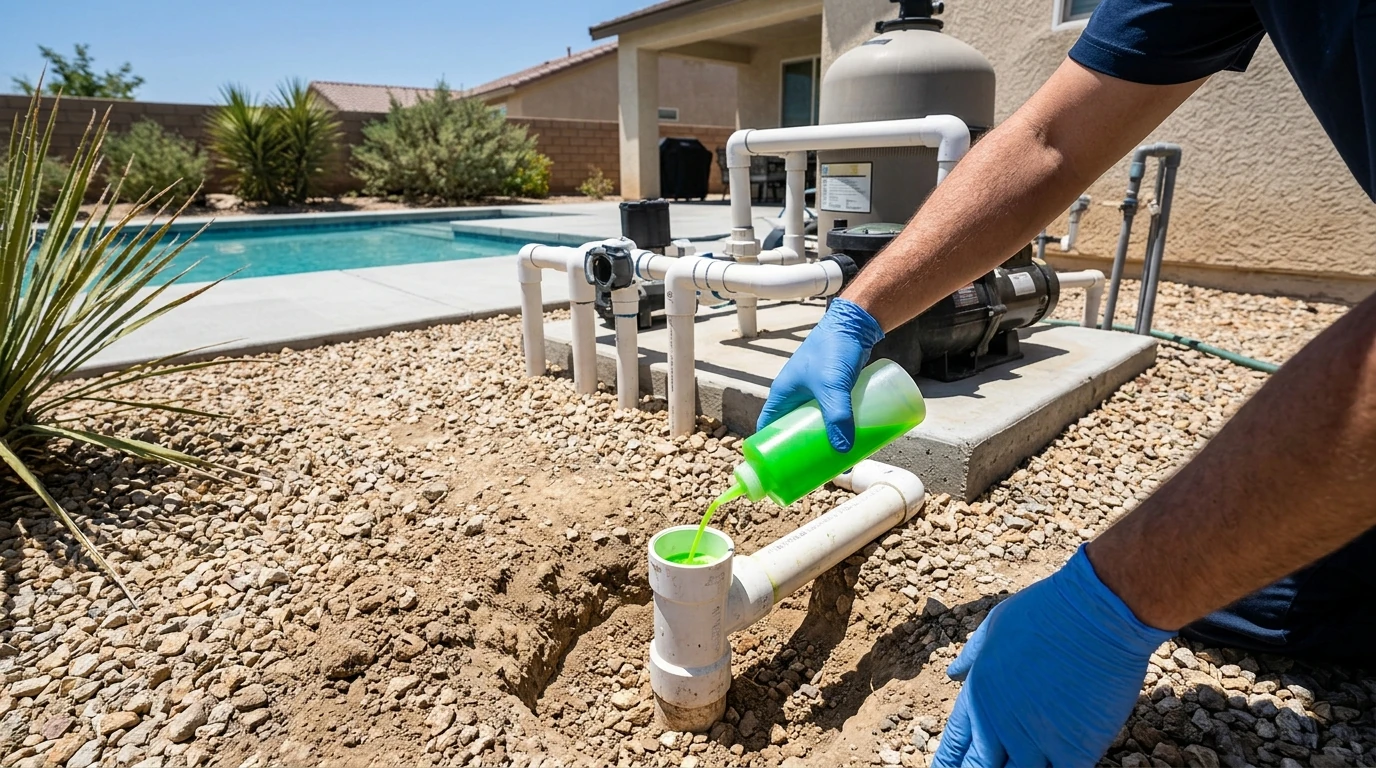
If you are a homeowner in Victorville, Hesperia, or Apple Valley, underground plumbing problems can sneak up on you. Wet spots in your yard. Slow drains. Sewer odors near the pool. A pool that keeps losing water. These are all warning signs. A sewer dye test is often the first step to figure out what is going on. But what happens when dye testing alone cannot tell you the full story?
This guide explains how a dye test works and what a failed dye test means. You will learn what to do when the dye test is not enough to solve the problem. Whether the issue is in your sewer system, pool plumbing, or drainage lines, we cover the next steps.
When you need expert help, GFC Pool Cleaning & Repair offers advanced pool leak detection and trenchless pipe repairs in Victorville and the High Desert.
Call us at (760) 780-8620 for fast, honest service.
A sewer dye test is a simple inspection method. It is used to trace water flow through your plumbing or drainage system. A plumber or inspector will introduce dye into a drain, fixture, or access point. Then they watch to see where the dye goes. If the dye appears where it shouldn't, it tells you something is wrong with your plumbing system.
Here is a step-by-step look at how a typical sewer dye test works:
The test uses a simple idea: dye to trace where water actually goes versus where it should go. It can reveal hidden leaks, improper sewer connections, and drainage or sewer cross-connections that you would never spot on your own.
A dye test can help identify several common problems:
From the GFC Team: We use dye testing as part of our pool leak detection process. It is a great first step, but in our 29 years of experience, we know that some leaks need more than dye to find.
In many areas, a dye test is required during a real estate deal or home inspection. Many municipalities in Southern California require a dye test before a home sale closes. This makes sure the property does not have illegal connections or sewer line problems.
Municipal codes in some High Desert areas also require a dye test when new plumbing work is done. They may also require one when property owners apply for certain permits. If your municipality requires a sewer dye test, you will need a licensed plumber or inspector. They will run the test and provide the test result to the city.
Even when a dye test is not legally required, it is a smart idea for any homeowner who notices signs of poor drainage, wet areas in the yard, or sewer backups.
A failed dye test means the dye showed up where it should not. Maybe it appeared in a storm drain. Maybe it surfaced in your yard. Or maybe it proved an improper link or leak in the line.
Here are common reasons for a failed dye test:
A failed dye test is a serious issue. It means raw sewage could be leaking into the ground. It could be getting into the soil or entering the stormwater system. Property owners who ignore a failed dye test risk fines from the city. They also risk damage to their property.
After a failed test, the next step is to find the source of the problem. This is where dye testing often falls short. A dye test tells you something is wrong. But it does not always tell you where the pipe breaks or what caused the failure. That is when you need a deeper inspection.
Dye testing is a useful first step, but it has limits. Here are situations where a dye test is not enough:
In short, a dye test is good at confirming that a problem exists. But to pinpoint the exact spot, you often need a camera inspection, pressure testing, or electronic detection for accurate testing.
When a dye test shows a problem but cannot pinpoint it, a sewer camera inspection is the next step. A small camera is fed into the sewer line or drain pipe. It sends back live video of the inside of the pipe.
A camera inspection can show you:
For pool plumbing, GFC uses tools from Leaktronics. This goes far beyond a basic dye test. We can find leaks in return lines, skimmer lines, main drains, and underground pool plumbing. These are leaks a dye test alone would miss.
Pro Tip: If you had a professional dye test done and the test result was a fail, ask for a camera inspection before agreeing to any excavation. Knowing the exact location saves you money and prevents unnecessary digging.
Once the inspection confirms the source of the problem, it is time to fix it. Property owners in the High Desert have several repair options, depending on the type of pipe failure and where it is located.
Traditional excavation means digging a trench to reach the broken pipe. The crew will remove the damaged section and replace it with a new pipe. This works for shallow pipes in open areas. But digging is messy, slow, and costly. It tears up landscaping, driveways, and decks.
In many cases, you can skip excavation with modern methods.
Trenchless pipe repair is a newer method that fixes underground pipes without digging up your whole yard. There are two main approaches:
Trenchless methods save time and money. They also keep your yard, pool deck, and plants safe from the mess of digging.
GFC Pool Cleaning & Repair offers trenchless pipe repairs for pool plumbing in Victorville and the High Desert. Got a broken pool return line? A cracked main drain pipe? A bad suction line? We can fix it with barely any digging.
If the damage is in one small area, a spot repair may be all you need. The crew will dig a small hole to reach the bad spot. Then they remove the damaged section and replace it with a new pipe. This is faster and cheaper than a full replacement.
In some cases, the pipe is too old or too damaged to save. Full pipe replacements mean the old line is pulled out and a new one goes in. This is common with older clay or cast iron sewer lines that have hit the end of their life.
Many homeowners in the High Desert deal with both sewer issues and pool plumbing issues. Here is how dye testing differs for each:
For pool owners, we suggest starting with a dye test first for cracks or fittings you can see. But if the leak is underground or the dye does not give a clear result, GFC's tools can find the exact spot.
Not sure if your situation calls for more than a basic sewer dye test? Here are the warning signs:
GFC Tip: Do not wait for the problem to get worse. In our experience, a small sewer issue or pool plumbing leak today becomes a major pipe failure and expensive repair tomorrow.
Some municipalities require a sewer dye test before a home can be sold. They also require one when a sewer service permit is pulled. In many High Desert towns, municipal inspectors use dye testing to check for illegal links between the sanitary sewer and stormwater systems.
If you fail the municipal dye test, you will need to:
Property owners who sell a home with a known sewer issue risk legal trouble. They also risk lower property values. Getting ahead of the problem with accurate testing and proper repairs is the smart move.
GFC Pool Cleaning & Repair has served the High Desert since 1996. We are licensed, insured, and family owned. We are known for pool care, and our skills extend to underground plumbing, leak detection, and trenchless pipe repair for pool and spa systems.
We use dye testing as part of our inspection process. When a dye test alone is not enough, we bring in advanced tools to find the source of the problem fast. Then we fix it right with barely any mess on your property.
Our sewer repair services for pool plumbing include:
We serve Victorville, Hesperia, Apple Valley, Adelanto, Oak Hills, Barstow, Phelan, El Mirage, Helendale, and Sun Village.
If you have had a failed dye test, or you suspect an underground plumbing problem that a dye test cannot solve, GFC is here to help. We combine professional dye testing with advanced detection and trenchless repair to get to the bottom of the issue fast.
Call GFC Pool Cleaning & Repair today at (760) 780-8620 for pool leak detection and trenchless pipe repair in Victorville and the High Desert.
Get a Free Estimate | See All Our Services
GFC Pool Cleaning & Repair is a licensed, insured, and family-owned pool service company based in Victorville, CA. We proudly serve the entire High Desert, including Hesperia, Apple Valley, Adelanto, Oak Hills, Barstow, Phelan, El Mirage, Helendale, and Sun Village.