gaffowl@aol.com
(760) 780-8620
gaffowl@aol.com
(760) 780-8620

High Desert wind can affect your pool water and filtration system. Learn how windy conditions introduce contaminants and how to protect your swimming pool.
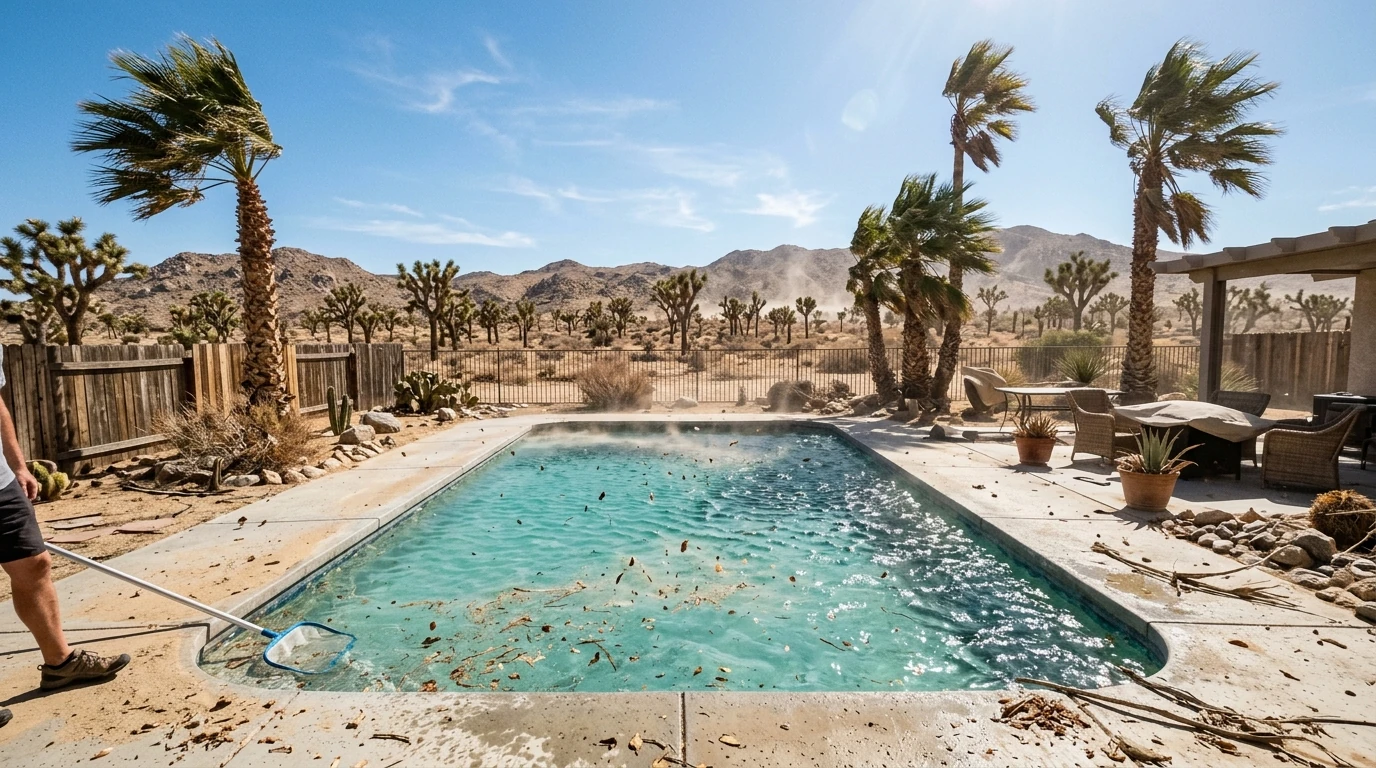
If you live in Victorville, Hesperia, or Apple Valley, you already know the wind out here is no joke. Strong winds blast through the High Desert year-round, kicking up dust, sand, and debris from every direction. And if you own a swimming pool, that wind is working against you every single day.
High Desert wind does more than just blow leaves into your pool. It can wreck your pool chemistry, clog your filter, and turn clean water cloudy in a matter of hours. Windy conditions introduce contaminants that throw off your chemical levels, drain your chlorine, and create the perfect setup for algae to take over.
This guide explains exactly how the wind can affect your pool and what you can do to fight back. And when the wind wins a round, GFC Pool Cleaning & Repair is here to help. We have kept High Desert pools clean and balanced since 1996.
Call us at (760) 780-8620 for expert pool service in Victorville and the surrounding areas.
Every gust of High Desert wind carries something with it. Dust, sand, pollen, leaves, dead bugs, and fine particles all land on the pool surface and sink to the pool floors. These are not just ugly. They are organic contaminants that mess with your water chemistry in real ways.
Here is what happens when winds carry debris into your pool:
From the GFC Team: We see this every spring and fall in Victorville. A single windy day can dump enough debris into a pool to burn through an entire dose of chlorine overnight. That is why we tell every pool owner to check chemical levels the morning after a big wind event.
Chlorine is the main sanitizer that keeps your pool water safe for every swimmer. But in the High Desert, wind creates two big problems that lead to fast chlorine loss.
Every leaf, bug, and speck of dust that lands in the pool creates what the pool industry calls "chlorine demand." Your chlorine has to work harder to break down all that organic matter. The more debris in the water, the more chlorine gets used up. On a calm day, your chlorine levels might hold steady. On a windy day, they can drop fast.
Wind moving across the pool surface speeds up water evaporation. As pool water evaporates, the remaining water gets more concentrated. This can push calcium hardness levels up and throw off your overall water chemistry. In a hot summer month with steady wind, you can lose an inch or more of water per week just from evaporation.
Water evaporation also lowers your water level, which can cause problems with your pool pump and skimmer. If the water drops too low, the pump pulls in air instead of water.
Wind does not just steal your chlorine. It can throw off your entire water chemistry balance. Here is a closer look at the key levels and how the wind pushes them out of range.
When pH climbs above 7.6, chlorine efficiency drops fast. That means even if you have enough chlorine in the water, it cannot do its job well. Desert dust tends to push pH up, so High Desert pool owners need to test pH more often than folks in other areas.
A chemical imbalance like this is one of the most common problems we fix at GFC. A quick water test and the right adjustments can get your pool back on track.
Your filtration system is the main line of defense between your pool and all the junk the wind blows in. But the High Desert puts your filter through a serious workout.
On a calm day, your filter handles normal pool water just fine. On windy days, the amount of dust, sand, and debris entering the pool skyrockets. Your filter has to work much harder, and it fills up faster. If you do not clean it in time, the filter pressure rises, flow drops, and your pool water stops getting clean.
Here is how wind affects different filter types:
Tip: After a major wind event, check your filter pressure right away. If it is more than 8 to 10 PSI above the clean baseline, it is time to clean or backwash.
The skimmer catches floating debris before it reaches the pump and filter. But on a windy day, the skimmer basket fills up fast. If it overflows, debris can get past and clog the pump basket or even reach the impeller.
Empty your skimmer and pump baskets frequently during windy stretches. Regular skimming of the pool surface with a hand net also helps. The more you remove by hand, the less your filtration system has to handle.
Protecting your pool from the High Desert wind takes a little extra effort, but it pays off big. Here is a simple pool maintenance routine built for windy conditions.
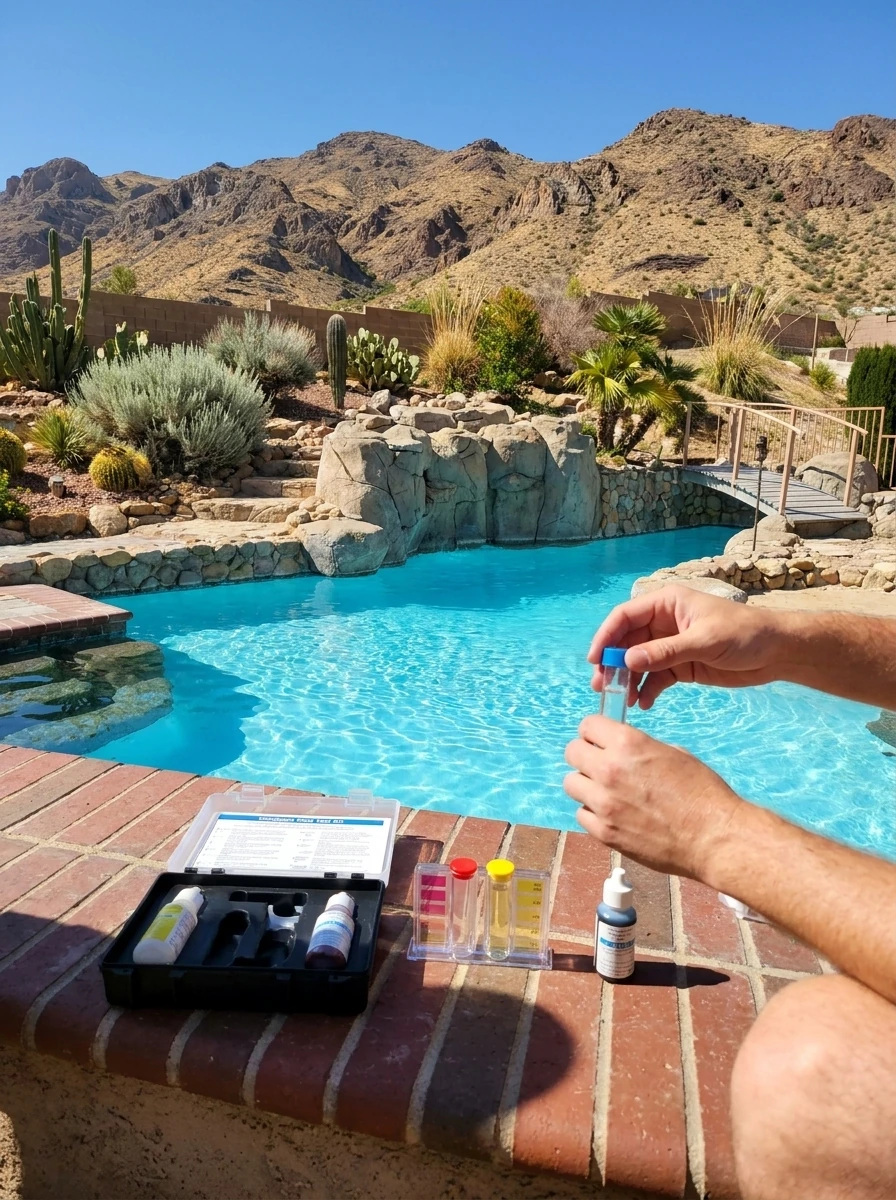
After a big wind storm, your pool chemicals may be way off. Here is a quick post-storm checklist:
If phosphate levels test high, add a phosphate remover. This takes away the food source that algae need, which helps keep your pool clear even when the wind keeps blowing.
Wind is not the only weather challenge in the High Desert. Rainwater can also throw off your water chemistry, especially during the colder months. Rain is slightly acidic, so it can lower your pH and dilute your chlorine. After a rain storm, always test the water and adjust.
During the colder months, many pool owners cut back on pool care. But wind and dust do not stop just because the weather cools down. If your pool is closed for the season, make sure your pool cover is secure and check on it after storms. If you keep the pool open year-round, stick to your pool maintenance routine even when it is cold outside.
GFC Insight: We recommend keeping up with regular pool maintenance even in winter. Algae can still grow in the colder months if chemicals drop. A little upkeep now prevents a green mess when swimming season returns.
When wind blows in debris, your chlorine drops. When chlorine drops, algae gets a chance to grow. When algae starts, your water clarity tanks and the pool turns green or cloudy. It is a cycle that catches many pool owners off guard.
Here is how to break it:
If you are dealing with a full algae bloom, shocking the pool hard, brushing, and running the filter around the clock is the fastest fix. For stubborn algae, a professional service can handle it quickly.
One long-term way to cut down on wind damage is to use landscaping around your pool area. Strategically planted hedges, bushes, or privacy screens on the windward side of your pool can slow down gusts before they hit the water.
Desert-friendly plants like oleander, Texas sage, or tall ornamental grasses work well and do not need much water. Even a short wall or fence section can make a difference by redirecting the wind up and over the pool surface.
Fewer contaminants in the pool means less strain on your filter, less chlorine loss, better water quality, and easier pool care overall.
At GFC, we know what the High Desert throws at swimming pools. We have been your local pool service since 1996, helping families in Victorville, Hesperia, Apple Valley, Adelanto, Oak Hills, Barstow, Phelan, El Mirage, Helendale, and Sun Village keep their pools sparkling.
Our pool cleaning and maintenance service includes regular skimming, vacuuming, filter cleaning, and full water chemistry testing. We adjust your pool chemicals to match what the desert throws at you, from wind and dust to heat and evaporation.
We also offer pool equipment repair if the wind has pushed your pool equipment and filtration system past its limits. From pool pump repair to filter swaps, our team handles it all.
Need your pool cleaners serviced? Dealing with hard water scale on your surfaces and equipment? We have you covered. GFC is your local pool guy with over 29 years of hands-on experience. We are licensed, insured, and family owned.
Do not let the High Desert wind run your pool into the ground. Whether you need help with water chemistry, a filter that cannot keep up, or a full pool maintenance routine built for windy conditions, GFC is here.
Call GFC Pool Cleaning & Repair today at (760) 780-8620 for professional service in Victorville and the High Desert.
Get a Free Estimate | See All Our Services
GFC Pool Cleaning & Repair is a licensed, insured, and family-owned pool service company based in Victorville, CA. We proudly serve the entire High Desert, including Hesperia, Apple Valley, Adelanto, Oak Hills, Barstow, Phelan, El Mirage, Helendale, and Sun Village.