gaffowl@aol.com
(760) 780-8620
gaffowl@aol.com
(760) 780-8620

Apple Valley CA tap water affects your pool. Learn how local contaminants, hard water, and EPA guidelines shape pool care. GFC can help.
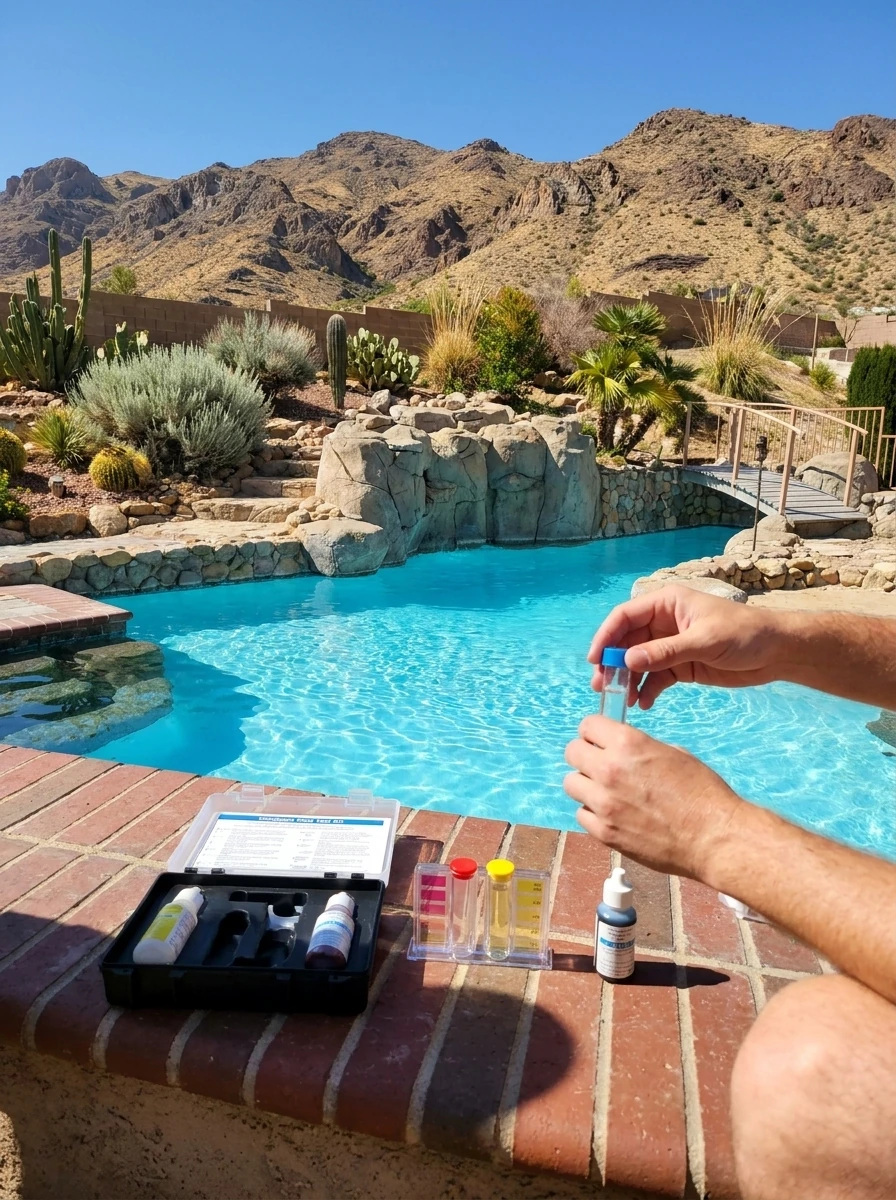
If you own a pool in Apple Valley, the water you use to fill it matters a lot. Apple Valley's water supply comes from local wells and the State Water Project. That means it picks up minerals, treatment chemicals, and trace contaminants including natural compounds along the way.
Your water quality report from the local provider shows that Apple Valley CA tap water meets federal drinking water standards. But meeting the minimum legal standard and having water that is great for your pool are two different things. Many residents notice the water is hard. It can have a mineral taste. And the level of certain contaminants, while safe for drinking water, can cause real trouble in a pool over time.
This guide covers what every Apple Valley pool owner needs to know about local water quality and how it shapes your pool care. And when you need expert help, GFC Pool Cleaning & Repair has been serving the High Desert since 1996.
Call GFC at (760) 780-8620 for pool service in Apple Valley and the surrounding areas.
The town of Apple Valley sits in the upper Mojave Desert in San Bernardino County, California. The area is dry, urban in parts, and growing fast. Water here comes from wells that tap into desert aquifers, plus water brought in from the California State Water Project.
That mix creates a few traits that matter for pool owners:
From the GFC Team: We have worked with Apple Valley pool owners for years. The number one issue we see is hard water damage. Scale builds up on tile, inside heaters, and on filter parts. If you do not stay on top of it, the long-term cost can be big.
You may have seen your annual water quality report from the town or your water provider. These reports list every contaminant that was tested, the level found, and whether it meets the EPA maximum contaminant level (MCL) and California guideline limits.
Here is what that means for your pool:
Knowing these standards gives you a better measure of what is in your water and why your pool needs extra care.
Let us get specific. Here are the biggest water quality challenges you face as a pool owner in Apple Valley, CA, and what to do about each one.
Hard water is the top issue. Apple Valley tap water carries a lot of calcium and other minerals. In your pool, high calcium leads to white crusty scale on tile lines, inside your heater, and on your filter.
If scale builds up inside your heater, it cuts efficiency and can lead to early replacement. Scale on the filter cuts water flow and forces the pump to work harder.
What to do:
Apple Valley tap water comes with chlorine already in it. When you fill or top off your pool, that chlorine adds to what is there. It sounds like a good thing, but it can throw off your balance if you are not watching.
On top of that, the desert heat burns through chlorine fast. You might add chlorine in the morning and find low levels by noon. This creates a cycle where you are always chasing the right level.
What to do:
Your pool filter does the heavy lifting of keeping water clear. But in Apple Valley, the filter has to deal with more than just dirt and leaves. Mineral particle buildup, fine sand, and even microplastics from the water supply add to the load.
Over time, this extra work hurts filter performance. Filters clog faster. Sand filters channel. DE grids wear out sooner.
What to do:
Water is a key resource in the desert. Apple Valley pool owners know this well. With dry weather most of the year, every household has to think about water usage.
A typical pool in California holds 20,000 to 30,000 gallons. That is a big number. But with smart care, you can keep water usage low and get long-term savings on both water and chemical costs.
Here are ways to reduce water usage and protect your pool:
Tip: Track your water usage month to month. If you see a spike you cannot explain, it could be a leak. GFC can test and find hidden leaks fast, which gives you peace of mind and saves money.
Your pool is not the only place where Apple Valley water quality matters. The same hard water that scales your pool tile affects your household too. Hard water leaves spots on shower glass, builds up in your water heater, and makes laundry feel stiff. Knowing the full picture helps you plan for the right fixes both indoor and outdoor.
Some Apple Valley customers choose a whole-home water softener. This helps with indoor water, but most pool pros say to keep raw water for the pool. Softened water swaps calcium for sodium, and too much sodium in pool water creates its own issues.
For your pool, the best approach is a comprehensive water test that measures hardness, pH, chlorine, alkalinity, and total dissolved solids. Take a water analysis sample to a trusted pool store or ask GFC to test it during a service visit. The data from this test tells you what to adjust.
When it comes to water quality and pool care, the right team makes all the difference. Here is what one of our High Desert customers had to say:
Fair prices. Skilled work. On time. That is the GFC standard every customer can expect.
GFC Pool Cleaning & Repair has served the High Desert since 1996. We are licensed, insured, and family owned. Our goal is simple: keep your pool safe, clean, and running well all year.
We know what Apple Valley water does to pools. We see the scale, the hard water stains, and the gear wear every week. Our team handles pool cleaning and care, pool gear repair, pool tile repair, and pool leak detection.
Whether you live near the lake, along the main roads, or out toward the open desert, GFC is your local pool service resource. We also serve Victorville, Hesperia, Adelanto, Oak Hills, Barstow, Phelan, El Mirage, Helendale, and Sun Village.
The long-term improvement of your pool starts with knowing your water. Let us help you build a care plan that fits what Apple Valley water throws at your pool.
Do not let hard water and hidden contaminants wreck your pool. With the right testing, the right filter schedule, and a trusted local pool service, your pool can stay clear and safe every season.
Call GFC Pool Cleaning & Repair at (760) 780-8620 today for effective pool service in Apple Valley and the entire High Desert.
Get a Free Estimate | See All Our Services
GFC Pool Cleaning & Repair is a licensed, insured, and family-owned pool service company based in Victorville, CA. We proudly serve the entire High Desert, including Apple Valley, Victorville, Hesperia, Adelanto, Oak Hills, Barstow, Phelan, El Mirage, Helendale, and Sun Village.